
Here is a photo of our baby taken last year while on our cross country trip. It was her first experience with a majestic, giant redwood. The picture speaks for itself.
Crazy Summer

The weather has been unseasonably cool. We were just getting used to 90 plus degree weather (which didn’t really kick in until last week – only a month late), when yesterday the temp went from about 88 on the porch to 75 in 30 minutes. The rain fell, and has been falling ever since. Great for the gardens, and I’m not complaining. I love the smell of rain. It’s clean and things smell fresh and alive when there is a light rain falling. It is a smell I had grown very accustomed to while living in Humboldt County, California in the Pacific Northwest. It is a smell I realize I miss everytime it rains. I love my house, I love my property, I love Austin…but there are those days when I miss that smell, I miss the trees that soar a million miles into the sky. Thank you rain gods, for bringing a bit of that here in the rain…for making me feel at home.
Some images in the rain…
 Green toatoes getting a drink.
Love Lies Bleeding. We are excited about these first attempts at this gorgeous flower.
 And of course, my beloved Mexican Sunflowers.
Today’s forecast: 84 degrees; 100% precipitation. What a lovely summer!
What is there not to like about sunflowers?

I love sunflowers. They come in all different shapes and sizes. The giant sunflowers have tasty seeds. They bring birds, bees and butterflies to my garden. They provide a great “screen” for our front fence. They have provided shade and hiding places for the chickens. And they look great in my windowsill.

My favorite sunflowers of all time are Mexican sunflowers. I love the brilliant red/orange petals against the deep green leaves. We have 2 just starting to bloom, and the hummingbirds are happy!

Oh For The Love of Sprouts
 Jason loves sprouts of almost all types. We decided to “make” our own and are really happy with the outcome. Having never sprouted for consumption on this level before, it was quite a thrilling process for me. I’m sure some of you expert sprouters will snicker at a newbie’s enthusiasm over how simple, rewarding and truly amazing I have found the process, but what the heck. 🙂 It is all part of the master plan to grow our own, and I’m ready to jump on the sprouting bandwagon in that endeavor.
For whatever reason, sprouts have always seemed like a mystery to me in how they are produced. I’m no novice as to what happens when you couple a seed with water, but for some reason I never really thought about sprouting our own for sandwiches and the like. I saw the seeds at The Natural Gardener when we went to their seed sale, and was intrigued. Plus I couldn’t beat the price, even without the sale. $2.69 got me a good size packet of alfalfa seeds. I had the jar and nylon for a lid already, so it was just a matter of soaking seeds and starting the process. For several days I kept my little seeds in the dark, rinsing them carefully twice a day out of the light. I was thrilled when the first sprouts started, and I don’t even like sprouts…but I might have to start liking them. Especially after reading about all the benefits they have when consumed!
Nutritional info:
- Vitamins A, B, C, E and K
- Calcium, Iron, Magnesium, Phosphorus, Potassium, Zinc
- Carotene, Chlorophyll
- Amino Acids
- Trace Elements
- Protein: 35%
Not only that, but studies on canavanine, an amino acid found in alfalfa, has demonstrated benefit for pancreatic, colon and leukemia cancers. Plant estrogens are also abundant in sprouts. They increase bone formation and density and prevent bone breakdown or osteoporosis. They are also helpful in controlling hot flashes, menopause, PMS and fibrocystic breasts tumors. All that in these tiny little additions to a sandwich? How can I go wrong? Especially now that I’m sprouting my own.
Next up, wheatgrass! Oh yeah!
A Plethora of Seeds

I was so excited to open my mailbox yesterday and find an abundance of seeds from Heirloom Seeds. I have no idea how many of these will fair, but I’m excited to see what happens. 🙂 Here is a list of what I got:
- Peppermint
- Pyrethrum
- Sage
- Creeping Thyme
- Bull’s Blood Beet
- Early Siberian Kale
- Carantan Leek
- Buttercrunch Lettuce
- Flame Lettuce
- Lolita Lettuce
- White Boston Lettuce
- Clemson Spineless Okra
- New Zealand Spinach
- Sugar Loaf Squash
- Bellflower
- Bells of Ireland
- Crimson Clover
- Delphinium
- Climbing Nasturtium
- Rocky Mountain Bee Plant
- Waltham #29 Broccoli
We have another seed order arriving from Pinetree Garden Seeds with:
- Buckwheat
- Spelt
- Reggae Radish
- Cherry Belle Radish
- Adelaide Carrot
- German Chamomile
- Black Brandywine Tomato
- Aunt Ruby’s German Green Tomato
And from The Natural Gardener, we got last week:
- Tricolor Pole Beans (Green, Yellow & Purple)
- Summer Feast Heirloom Tomatoes (Black Krim, Sweet Persimmon, & Costoluto)
- Chianti Rose Heirloom Tomato
- Italian Trio Eggplants (Nadia, Beatrice & Rosa Blanca)
- Rainbow’s End Heirloom Tomatoes (Brandywine, Marvel Stripe & Green Zebra)
- Maximilian Sunflower
- Dill
- Autumn Beauty Sunflower
- Echinacea
- Amaranth
- Wheatgrass
- Zinnia
- Alfalfa for sprouts

I’ve been wanting to grow heirloom tomatoes for quite awhile now, so am really looking forward to what we can do this fall. I never liked tomatoes until I started growing my own. There is something extremely tasty about a beautiful, meaty tomato you picked off the vine a few minutes before cutting into it. My mouth is watering as I type…
One way to beat the heat!

Cob

Wikipedia’s short definition of cob: “Cob is a building material consisting of clay, sand, straw, water, and earth, similar to adobe. Cob is fireproof, resistant to seismic activity, and inexpensive. It can be used to create artistic, sculptural forms and has been revived in recent years by the natural building and sustainability movements.”
Most cob oven construction takes less than a day and costs less than $100 to build a pretty amazing oven. You can go with the traditional dome look or be creative and sculpt a masterpiece for your garden that is not only beautiful to look at, but extremely useful as well. Cob ovens have little impact on the environment and save a ton in energy usage and cost. Once your oven is built, you start the wood fire in it 2 – 4 hours before the actual cooking. Once the wood has turned to hot coals you scrape it all out, and start baking! The heat from the initial fire will last hours and you can actually bake several things throughout the course of the day. And not just breads and pizzas…no no no. You can cook just about anything you want in a cob oven, even dehydrate fruit and herbs..;)
From Kiko Denzer’s site: “Earthen ovens make beautiful food, and perform as well as the fancy $4000 Italian ones! Pizza cooks in 3 minutes; a whole menu can follow: Start with bread or roast fish, meat, and vegetables, casseroles and slow-cooked soup or stew, desserts, steamed bread, or overnite rice pudding. Then, dry fruit, or your next load of firewood (or even your wet shoes!) Wood-fired, retained heat technology is universally proven. The full, round shape is a naturally elegant work of art in the tradition of Southwestern ‘horno’ and Mediterranean ‘beehive’ ovens. Or sculpt a fire-breathing beast, or a bird-oven with benches!”
Not only does cob make a great building material for ovens, but actual buildings work just as well. It is an ancient way of building homes and shelter for humans and animals alike. They hold up well in various climates and temperatures; and the insulation properties of a cob structure make it function amazingly well throughout the seasonal changes. The U.K. is a great example of older cob construction where many of the old farm buildings and houses in areas such as Devon and Cornwall being composed of cob. In today’s world, architects are taking the idea of cob to new levels with the newfound love of green building. It is easy, economical and amazingly creative.
Here are just a few examples of some amazing cob structures:
 A cool cob oven.

This is actually a yoga studio.
 This is a great shed! I really love this one. City Farmer
Some interesting sites to check out:
That’s just a few that I’ve run across. As my research continues, I know I’ll be giving more mini-lectures here about the benefits of building with cob. It is really exciting, and something we, as a family, can all take part in during the entire process of construction.
Here’s to cob!
A Garden Fairy Showed Up Today
 And she is just the cutest thing! She really loves the garden, and I love seeing her in it…:)
 Another friend is hanging out with the tomatoes today. We had these in Hawaii and their webs always facinated me!
 New cucumbers peaking out. We planted some new ones in a different spot…hoping they do better than the last batch! 🙂
 Jason’s banana peppers are doing great! Make yummy additions to salsa….YUM!
And finally….your moment of zen. I love nasturtiums….

A Typical Morning
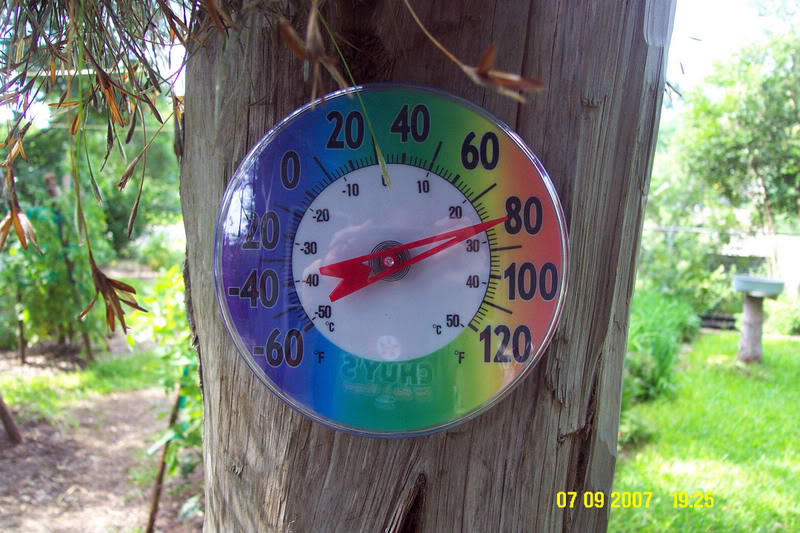
Summer is definitely here. This thermostat is on the front porch, in the shade at around 8:30 AM (the camera date and time are wrong in the picture). It’s breezy this morning though, so I am able to have the windows open for a bit. It is suppose to reach 91 this afternoon, although I’m not complaining because this time last year was well into the 100’s! It’s been a mild summer so far, with lots of rain. Which has been great for the gardens of course!
Speaking of gardens, I am so excited with how well our tomatoes and peppers are doing. They are growing like weeds and we are getting several fruit a day off them. Here’s a little roma looking just about ready to be plucked by eager little fingers (the kids LOVE picking the tomatoes). 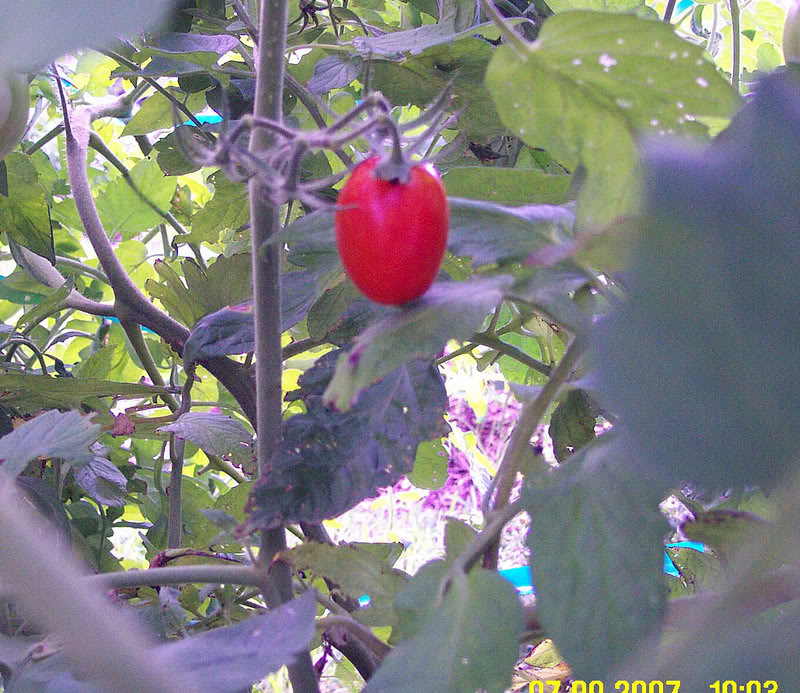 We just went to a great seed sale on Sunday at The Natural Gardener. I got a bunch of heirloom tomato seeds and am eager to plant at least 3 times the amount of plants we have now. We are fortunate that we can grow tomatoes in the fall here too.
We just went to a great seed sale on Sunday at The Natural Gardener. I got a bunch of heirloom tomato seeds and am eager to plant at least 3 times the amount of plants we have now. We are fortunate that we can grow tomatoes in the fall here too.
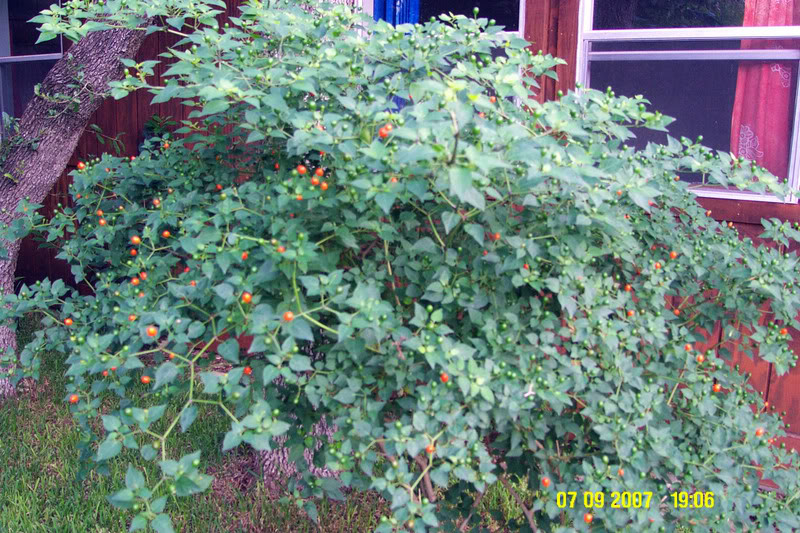
Basil, green pole beans and piquin peppers are thriving too!
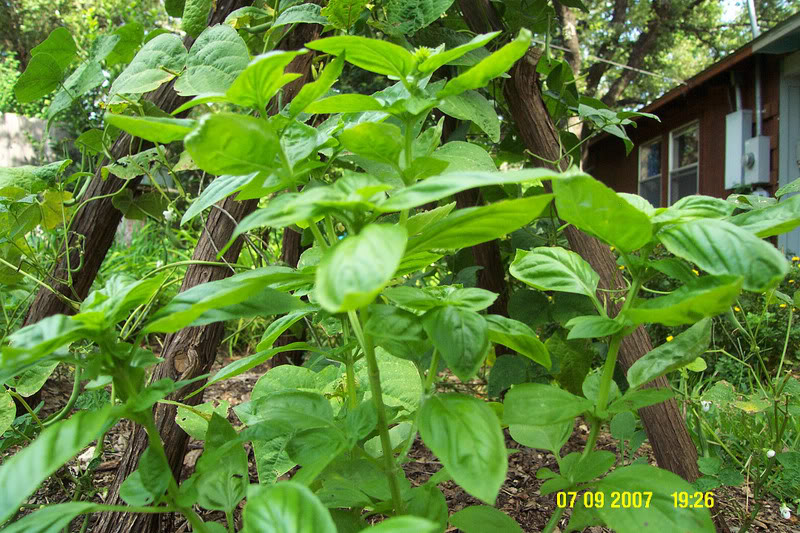
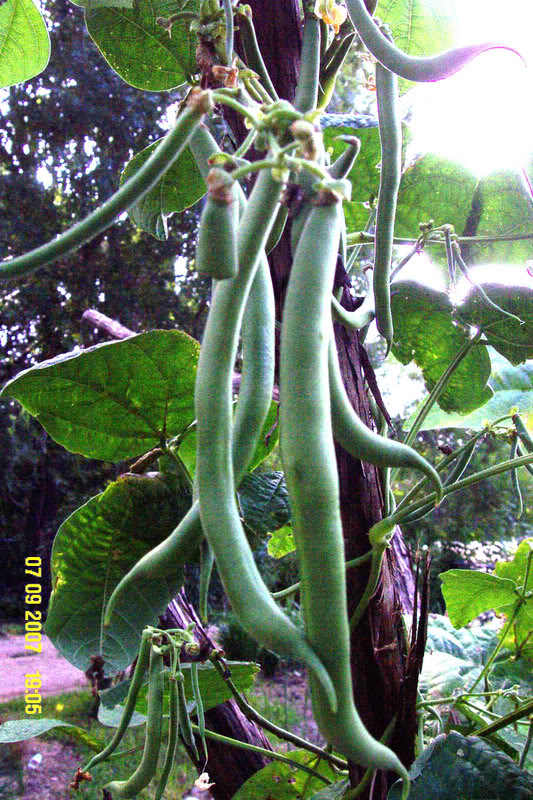
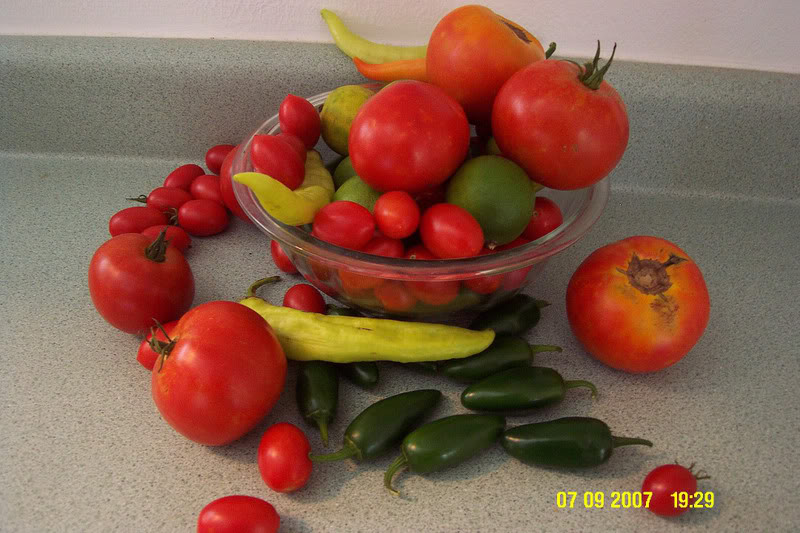
The perfect harvest for yummy summer salsa…the limes are not our’s, although
I’m dying for a lime tree! Enjoy!
Another Vegetable Area Completed

So we got another veggie section done over the weekend. Jason and his dad brought in lots of good, organic soil on Saturday. Sunday we shaped the mounds and planted the seeds. We have pumpkins, cantaloupe, more cucumbers, chard and eggplant. We’ll see how they do. This is the site for Jason’s gothic garden, but that will take awhile to get all the plants he wants….and it is a great veggie spot right now.
Sometimes it’s hard to be patient in our goals. We just bought this house in December, our first, and really want to see if we can make urban agriculture work for us. Thus, the idea of treating our little space as if we were homesteading. Everything costs money for sure, so it’s a slow process. We are hoping in the next year we will be producing a large percentage of our food though. Maybe we are setting ourselves up, but I think we can do it if we continue to work hard. It’s all trial and error, I know. We lost our entire corn crop to worms, so we know that not only is the soil not great down there, but we need mineral oil to drop on the tassles as they form. So we’ll replant. Our zukes were attacked by squash vine borers, but we were able to salvage enough to get a half way decent harvest. Next year we’ll be more prepared. So far our peppers and tomatoes are doing great though!
Reading Walter Jefferies’ blog, Sugar Mountain Farm has been incredibly inspiring. I’ve found alot of great information on his blog as well as many others who are trying to do the same thing. It is great to see this mini revolution really starting to take hold. I believe we really need to be aware of where our food comes from and growing our own and buying locally is a start. I used to believe that only organic was the way to go, but now I’m realizing that it is even more important to support local farming – who usually grow naturally anyway.
Oh! The UPS just dropped off the book we’ve been waiting for, “Build Your Own Earth Oven” by Kiko Denzer. We are going to do a cob oven and I’m thrilled! Okay..off to peruse the new book. 🙂